
lifestyle
Kofi's Outdooring: A Digital Companion for the Akan Naming Ceremony
A pocket guide built for one Ghanaian father preparing an abadinto — rite order, elder confirmations, and Kejetia market shopping, all in one place.
Artem
Founder
· 5 min read
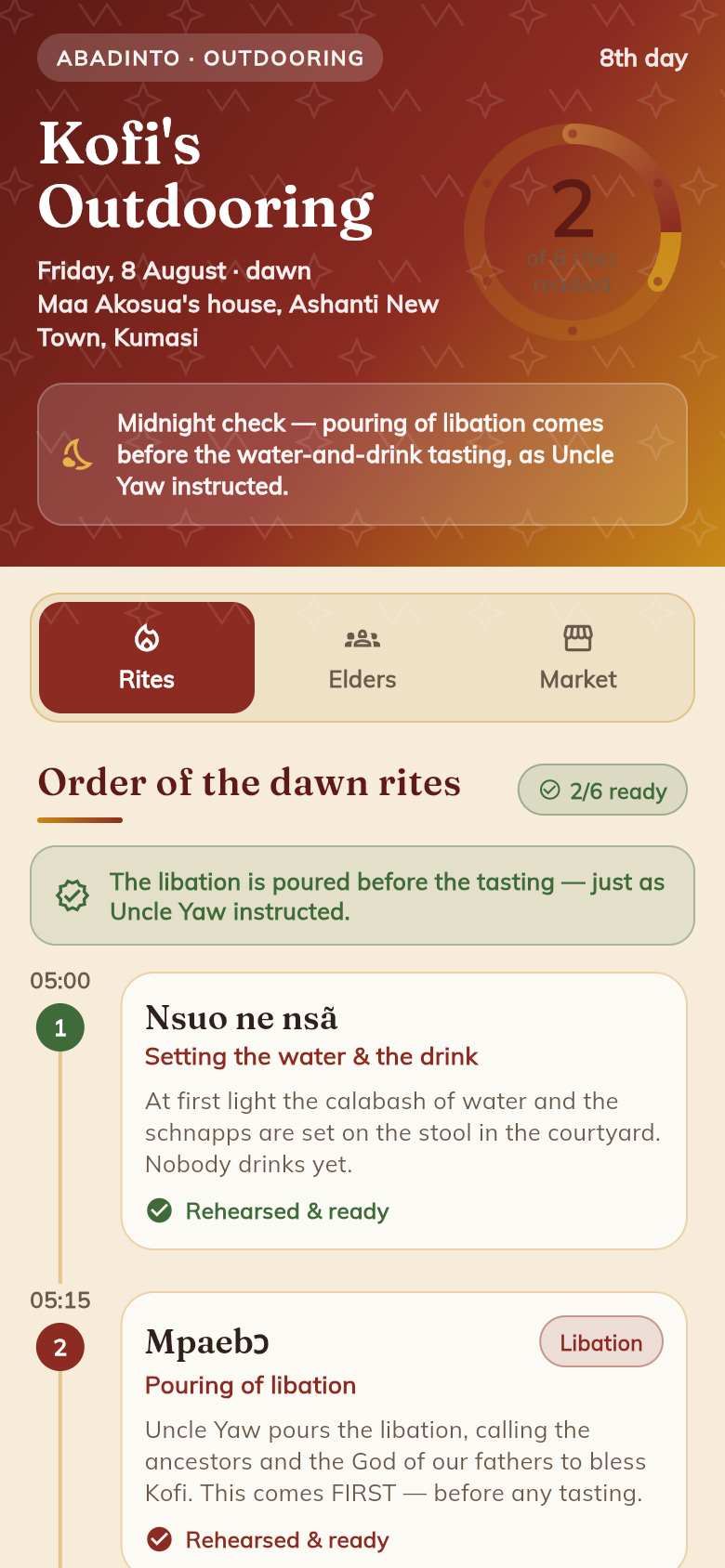
The night before an outdooring, the house is already buzzing. The baby is asleep, the schnapps bottles are counted, and Kofi is quietly going over Uncle Yaw's instructions in his head — libation first, then the water-and-drink tasting, then the name is spoken. The order matters. It always has. Missing it, even by accident, would be felt by every elder in that courtyard.
Kofi's Outdooring is a small app built for exactly that night. It holds the dawn rite sequence, tracks which elders have confirmed, and tallies the Kejetia shopping list in cedis. Nothing more, nothing less — and it opens already filled with the family's own world: Uncle Yaw, the courtyard in Kumasi, the bottles of schnapps lined up on the table.
Live demo
The dawn rites, in the right order
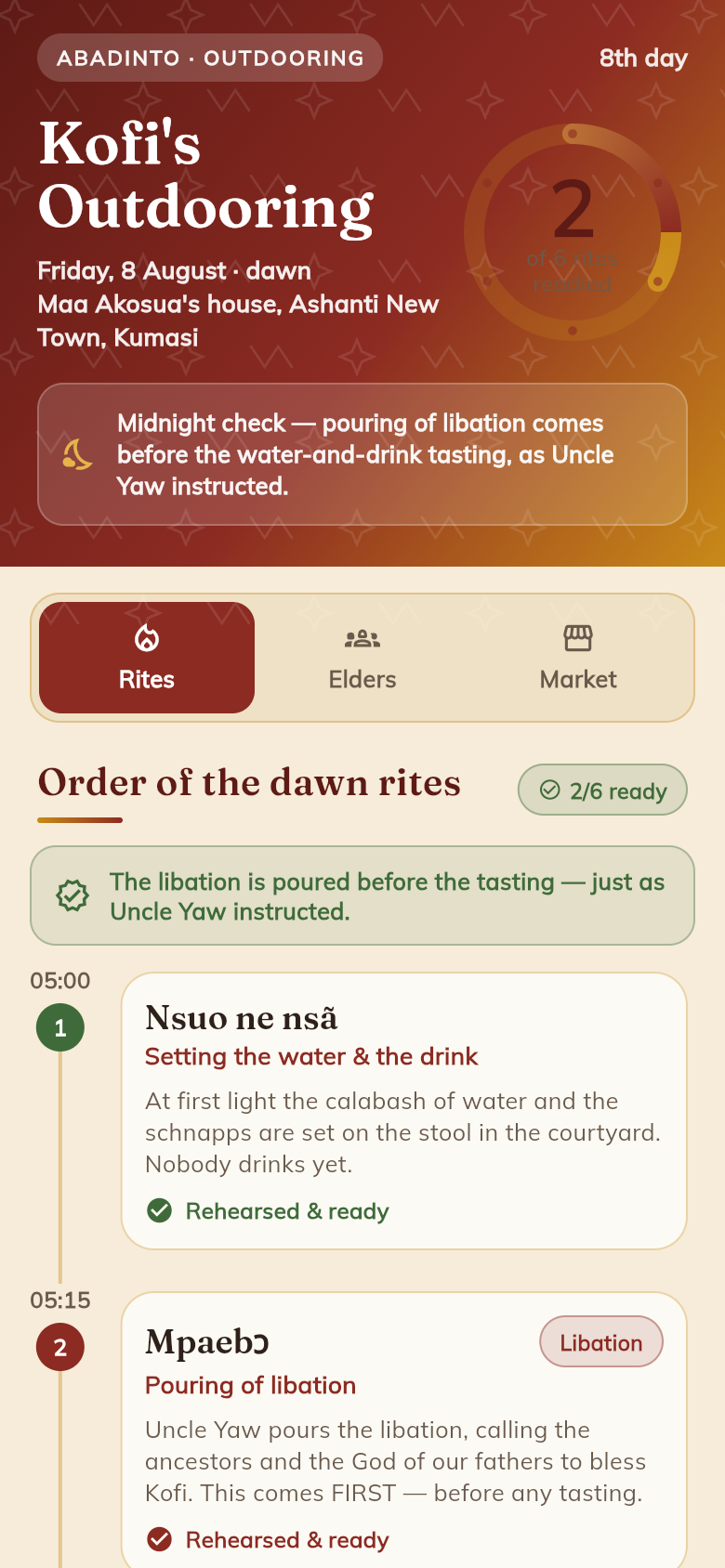
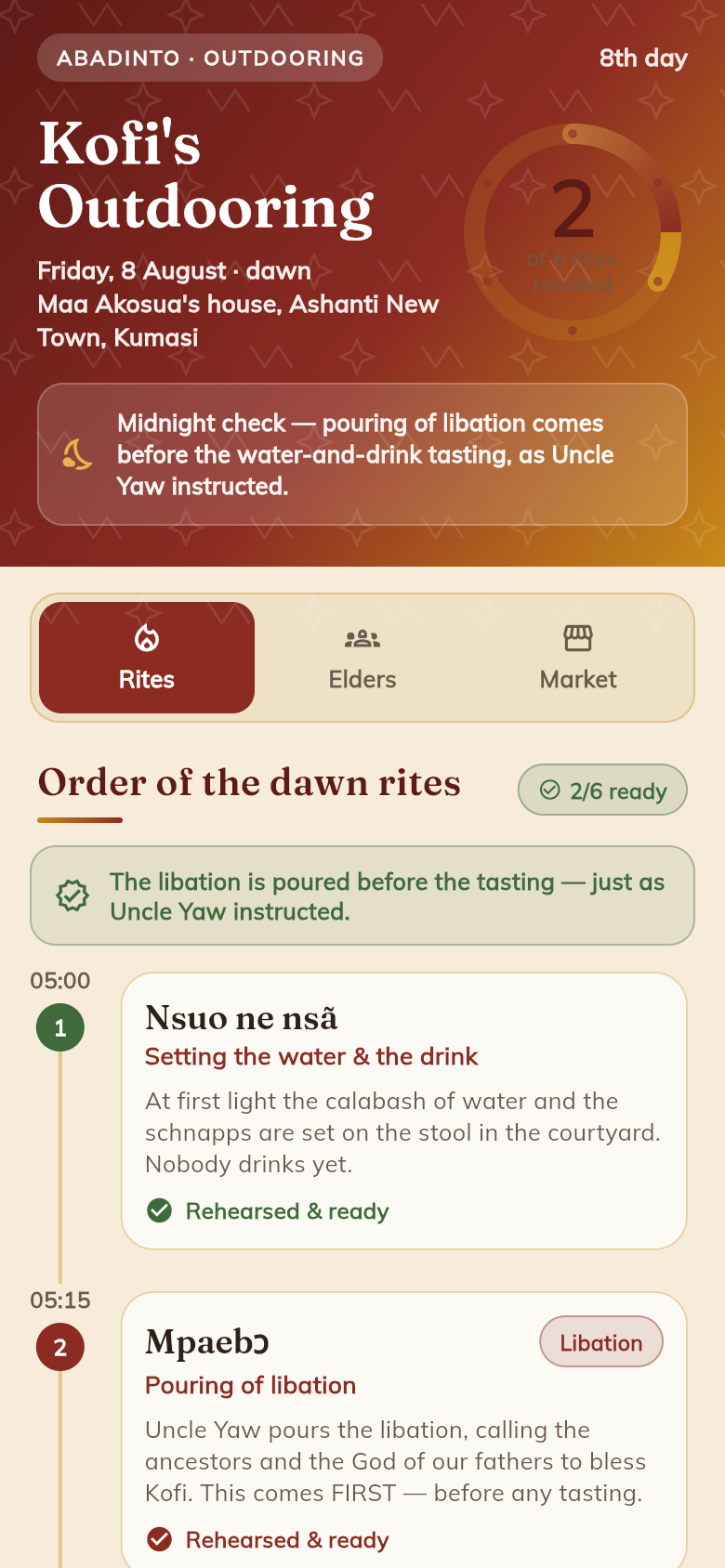
The heart of the app is a simple ordered timeline of the abadinto ceremony. Each rite appears in sequence, with its Twi name alongside a plain description of what happens and who leads it. The libation step sits first, anchored there on purpose — and if anything ever shifts out of place, the app flags it immediately.
Try tapping through the timeline in the demo. You will see that the libation-before-tasting rule is not just a note buried in a list. It is enforced visually, so there is no ambiguity at five in the morning when the elders are arriving and the courtyard is filling with people. Uncle Yaw's spoken instruction is now written down, in the right place, and it will not be forgotten.
Who is actually coming
Elder attendance at an outdooring is never quite settled until the day itself. Word travels by phone call and through relatives, and the list shifts. The app gives each invited elder a simple confirmed or awaiting toggle — a small thing that makes a real difference when you are trying to prepare enough kola nuts and know whether the namesake elder has confirmed.
The child's namesake is marked distinctly from the rest. In Akan tradition, the naming is not just a label — it is a connection to an ancestor or a respected person in the family. Seeing that name marked clearly among the guest list is a reminder of what the day is actually for.
Scroll through the elder list in the demo and toggle a few confirmations. The count updates live. Nothing syncs to a server or requires a login — it is all stored on the device, ready whether or not there is signal at the relative's home in Kumasi.
The Kejetia shopping list, in cedis
Schnapps and kola nuts are not optional at an outdooring. They are part of the ceremony — offered to elders, used in the libation, shared as a mark of welcome. Getting the quantities right means knowing how many elders are coming, and getting the cost right means keeping a running tally as you move through Kejetia market.
The shopping section of the app lists each item with its unit cost in cedis and a bought or remaining status. As items are picked up, the tally updates. There is no mental arithmetic needed in a busy market stall. You can see at a glance what is left and what it will cost.
It is a small feature, but it solves a specific problem: managing a traditional shopping run under time pressure, in a market where prices are spoken aloud and you are paying cash.
Built from one idea, seeded with real detail
This app did not start from a template about ceremonies in general. It started from Kofi's situation specifically. The rite names are in Twi. The market is Kejetia. The elder who gave the instructions is Uncle Yaw. The currency is cedis. Every screen speaks the family's world back to them, which is exactly what makes it useful rather than generic.
That specificity also makes it feel like something the family made for themselves, even though it came together quickly from a single idea. The live demo you can see here is seeded with real data from the ceremony — the names, the items, the timeline — so you can get a genuine sense of how it works, not just a placeholder walkthrough.
There is no account to create. No data leaves the device. It opens ready to use.
What you can do with it right now
Open the demo in the phone frame above and work through it the way Kofi did the night before the ceremony. Check the rite order, toggle an elder to confirmed, mark a schnapps bottle as bought. The app responds immediately and keeps everything in sync.
If you are planning an outdooring yourself, or helping someone who is, the logic here transfers directly. The rite sequence, the guest tracking, the shopping tally — these are the three things that cause the most anxiety in the days before the ceremony, and they are the three things the app handles.
If your situation is different — different rites, different guests, different market — the idea still holds: one tool, built around your specific event, that holds the details so you do not have to.
39
files in the build
40.4 MB
app bundle
Flutter Web
runs in any browser
Have a ceremony, a tradition, or a family event to plan?
Describe your situation in a sentence, and we will build you a tool that knows your specific rites, your guest list, and your shopping needs — ready before the day arrives.